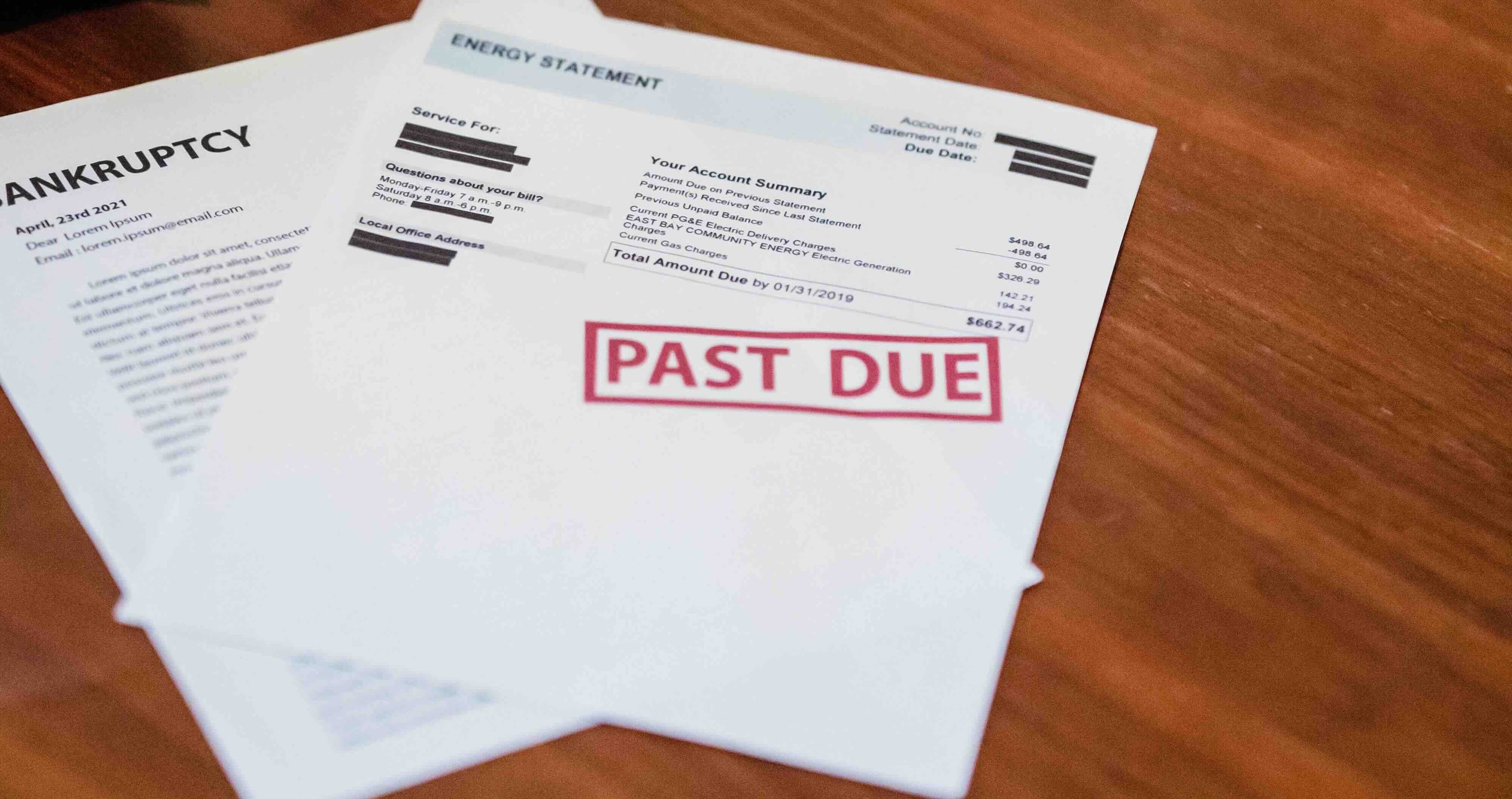

When bills scatter across cards, autopay dates, and email reminders, the cost is not only stress. It is late fees, penalty APRs, and interest on balances that grow while you are busy with everything else. Regaining control is less about willpower and more about a simple bill organizer: one monthly bill tracker list, one rhythm, and a clear order of operations.
Credit card debt remains a huge problem
U.S. household credit card balances have skyrocketed in recent years. The Federal Reserve Bank of New York quarterly household debt report regularly shows credit card balances in the trillion-dollar range nationally, with delinquency rates that rise when balances outpace income growth.
Carrying a balance means your “bill” is really two bills: the purchase and the interest on whatever you do not pay in full. With many cards still priced at high double-digit APRs (the Federal Reserve publishes average assessed interest rates on accounts that revolve balances, often well above 20% in recent years), even a few thousand dollars can cost hundreds per year in interest alone.
Paying in full each month turns the card back into a payment tool. When that is not possible yet, a written plan beats minimum payments on autopilot.
Drowning in late fees
Missing due dates is widespread. The Consumer Financial Protection Bureau (CFPB) and industry data have repeatedly highlighted billions of dollars in consumer fees, including late fees on cards, where a single missed payment can trigger a $30+ fee on many products (exact amounts vary by issuer and regulation changes).
Add penalty interest or lost promotional rates, and one forgotten due date can cost more than the underlying purchase. That is why a bill payment tracker habit (a calendar, checklist, or bill organizer template) pays off quickly.
According to survey research cited by the CFPB and financial health studies, a meaningful share of adults report difficulty paying bills on time or juggling due dates across accounts. You are not alone if mail and apps have felt like a fire drill.
Interest is the unrelenting quiet bill
Say you leave a $5,000 balance on a card charging about 22% APR and pay only the minimum due each month. That rate works out to roughly $1,100 per year in interest, or about $90 in the first month alone. A typical minimum payment might be around $125–$150, which means most of what you send early on covers interest, not the original purchases.
At that pace, paying off the full $5,000 can take 15 years or longer, with thousands of dollars in interest on top of what you charged. The CFPB publishes examples and calculators that show the same pattern: minimum payments stretch timelines and raise total cost. Paying even a fixed extra amount each month (or using a written payoff plan) shifts those numbers quickly.
Treating interest as its own line item in your review (“how much did we pay in finance charges this month?”) often sparks faster change than guilt.
Your monthly bill tracker reset in four steps
-
Build one master list: List every recurring obligation in a single bill organizer with columns for due date, amount (or estimate), and payment method (autopay, bank bill pay, manual). This will consist of spend like rent, utilities, insurance, loans, cards, subscriptions, and childcare. One monthly bill tracker list cuts missed due dates and shows heavy cash-flow weeks before they hit. If you like spreadsheets, the free bill tracker template gives you those columns in Excel or Google Sheets.
-
Align due dates with paychecks: If most bills hit the first week of the month but you are paid mid-month, move what you can (many issuers allow due-date changes once or twice a year). The goal is fewer “empty checking account” days.
-
Automate the predictable, manual the risky: Autopay works when amounts are stable. Keep manual control on variable cards until you trust the balance. Pay at least the statement balance on cards you use for rewards so interest does not erase the perk.
-
Review weekly for ten minutes: Scan new charges, confirm autopays cleared, and note anything unusual. Pair this with your budget so expense tracking and bill timing stay linked.
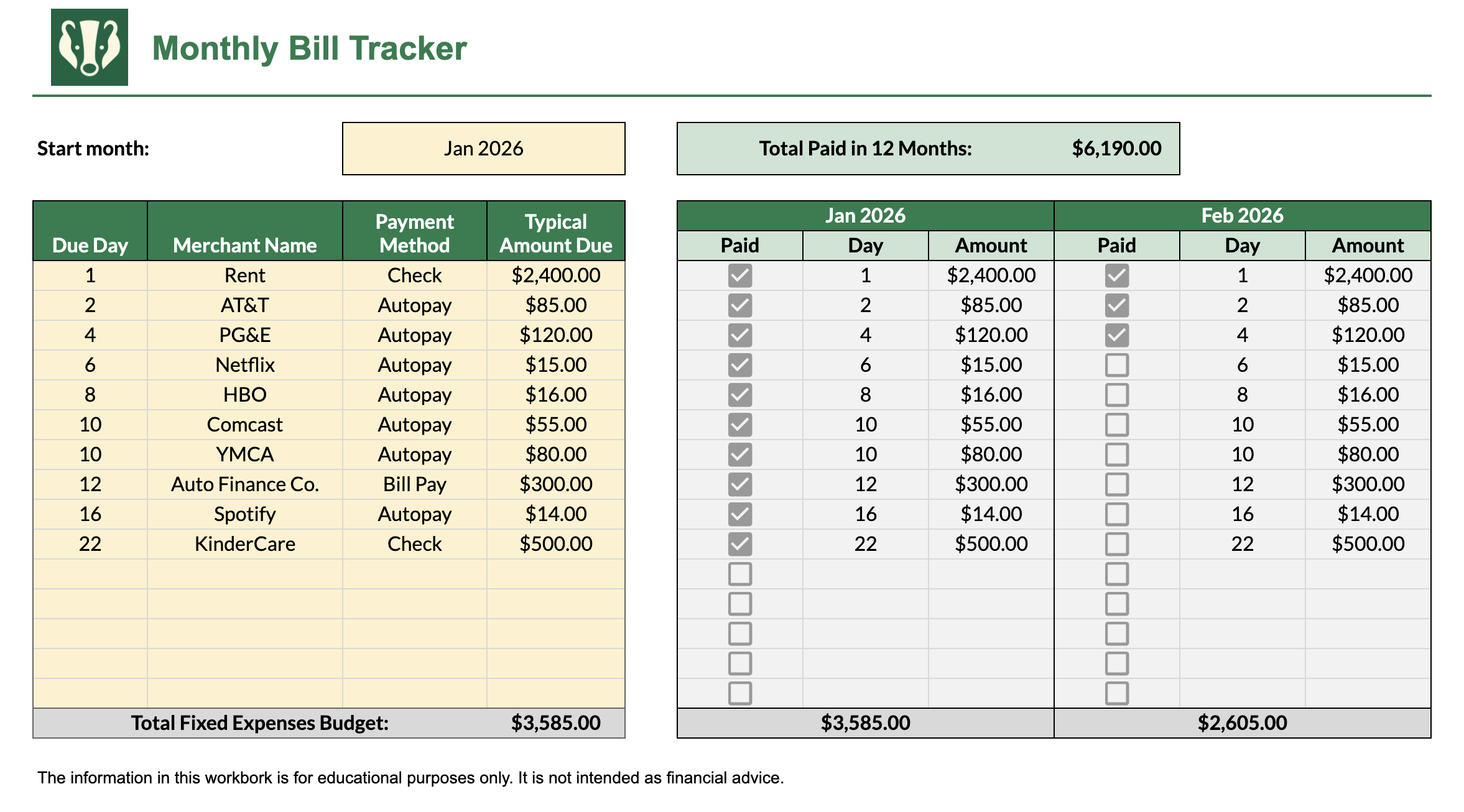
A monthly bill tracker template lists due dates, amounts, and payment methods in one place.
Good habits compound
Once your bill payment tracker is current, small habits stack:
- Pay cards in full when possible; if not, pick a payoff order (smallest balance or highest APR) and stick to it.
- Keep a small buffer in checking so autopay does not bounce.
- When a bill changes (insurance renewal, tax escrow), update the master list the same day.
Related reading: Best monthly bill tracker apps · Subscriptions and Recurring Bill Tracking All in One Place · How much should an emergency fund be?