

If you are juggling work, childcare, and the mental load of a household, just “staying on top of bills” often means sticky notes, phone calendar reminders, and a quiet worry that something will slip through. You are not bad at money - you are human, and bill tracking across cards, accounts, and apps was never designed to be easy.
Effectively managing your monthly bills requires a little setup, but once you have a process in place, your stress levels go down, your bills are paid on time with minimal thought, and you can focus less on the admin of daily life and more on what really matters to you.
Why bills feel overwhelming (even when you are trying)
Your monthly bills do not arrive as one neat list. They show up as autopay on one card, a utility bill withdrawal from your checking account, and a streaming trial you forgot to cancel. Expense management by memory is exhausting when life is already full.
That sprawl of services, devices, and bills is our new normal in this modern world. It is what happens when financial consolidation lives in a dozen browser tabs instead of one trustworthy picture. The goal is not perfection; it is a consistent process and single source of truth so you can worry and think less than you are now.
Core bill management strategies
Your busy life is less stressful when recurring charges and subscriptions live in a single source of truth. Whether this is a list you write down with pen and paper or a digital list automatically built in a budgeting app, getting organized and setting up a consistent process will result in fewer due-date scrambles, fixed costs you can trust, and forgotten renewals you can trim.
If you like spreadsheets first, BudgetBadger’s free bill tracker template works as a bill organizer template and bill payment tracker in Excel or Google Sheets—one place for due dates, amounts, and what you have already paid on recurring bills and subscriptions.
The tactics are simple:
-
Create a master bill checklist — Write down every monthly and quarterly bill, due date, minimum payment (if it applies), and how you pay it (credit card, bank transfer, landlord portal, etc.). You can start with a budgeting app, which will automatically detect your recurring spend and consolidate it into a single list.
-
Automate payments where it makes sense — Turn on electronic autopay with each provider when you are confident the timing and amount are predictable; it is one of the simplest ways to pay bills on time and avoid late fees. If a biller does not pull automatically, most banks offer scheduled bill pay. Some will even mail a check on the day you choose, which helps for rent or anyone who still needs paper.
-
Sync due dates with income — Lay your paycheck dates next to due dates on a calendar (paper, phone, or budgeting app). When you know which check covers which cluster of bills, you are less likely to get caught short, and less likely to live in low-grade anxiety all month.
-
Pick a regular “bill date” — Block the same window each month (20-30 minutes) to open statements, confirm funds, and fix anything off. Think of it as your standing bill-paying appointment, not a scramble you only do after a reminder text from the utility.
-
Consider a dedicated bills account — Use one checking account (or a clear envelope in your head and in your budget app) just for recurring bills and non‑discretionary pulls. What is left elsewhere reads as “safe to spend,” which cuts down on accidentally stealing from the rent bucket for takeout.
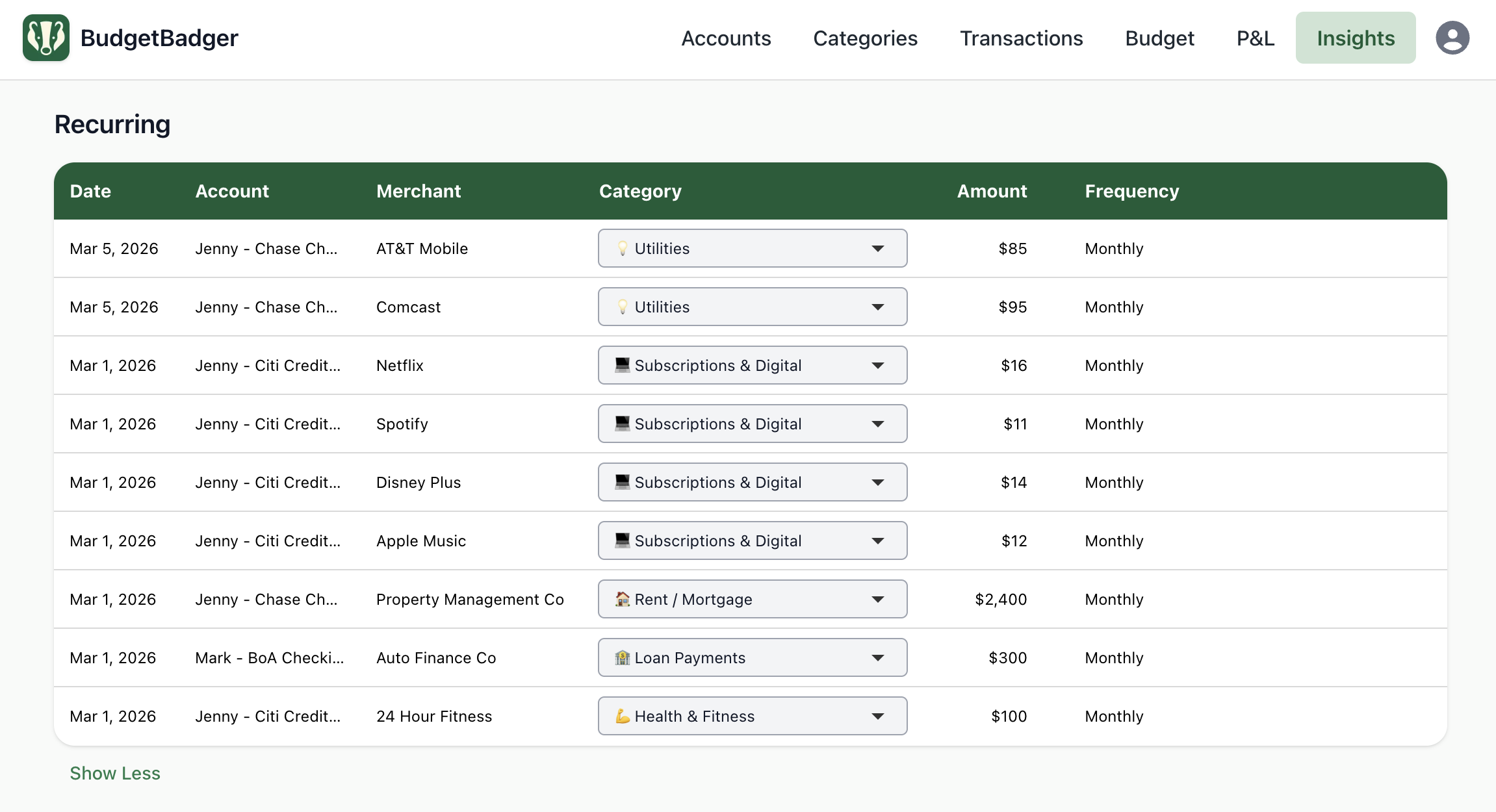
A single view of recurring charges helps you pay bills on time, stay organized, and spot subscriptions before they quietly drain the plan.
Good financial habits go a long way
A few simple rules and habits can make a significant impact towards improving and maintaining a healthy financial position:
- 50/30/20 Rule — When budgeting, allocate 50% of income to needs, 30% to wants, and 20% to savings and debt reduction. This is a common rule of thumb espoused by financial advisors. Staying within your means when it comes to your fixed needs, but still allowing for lifestyle spending, is a healthy balance that you can sustain long-term.
- Develop a review cadence — Decide on a schedule to review your bills and balances or your budgeting app. Consistency is more important than cadence. Set a time bi-weekly on Sundays, weekly on Fridays after your paycheck arrives, or even daily as part of your morning routine.
- Update when things change — Make sure you update your master checklist (and glance at your app) the same day when an autopay date changes or when an insurance premium materially changes, so your budget, account balances, and bills stay in sync.
Related reading: How to Regain Control of Your Bills · Best monthly bill tracker apps · Apps like Mint in 2026