

Headline Inflation Crossed 4% Again
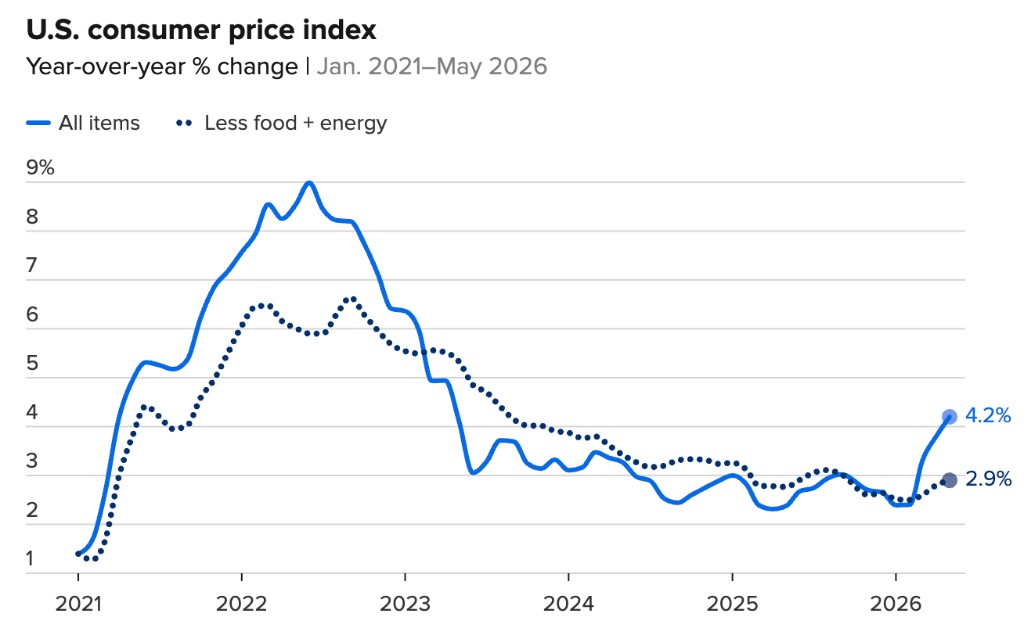
The May consumer price index rose 0.5% on a seasonally adjusted basis and 4.2% from a year ago, according to the Bureau of Labor Statistics report covered by CNBC. That annual reading is the highest since April 2023 and the first time headline inflation has topped 4% in three years, up from 3.8% in April.
The monthly gain matched consensus forecasts, but the level itself underscores how quickly price pressure has re-accelerated after a cooler stretch in 2024 and early 2025. For households tracking grocery, gas, and utility bills, the headline number is the one that tends to match lived experience even when economists focus on narrower measures.
Source: CNBC (CPI inflation report May 2026)
Energy Prices Powered the May Surge
Much of the May jump came from energy. The CNBC report notes that energy prices rose 3.9% for the month, leaving them 23.5% higher than a year ago. That pass-through shows up quickly at the pump and, with a lag, in electricity and transportation costs.
Airline fares rose 2.7% in May, one of the clearer signs that higher fuel costs are reaching services. Transportation services overall fell 0.6%, suggesting the energy shock has not spread uniformly across the economy. New vehicle prices declined 0.3% and used cars and trucks edged up just 0.1%, while motor vehicle insurance fell 1.7%.
Heather Long, chief economist at Navy Federal Credit Union, told CNBC that many Americans feel squeezed because "the basics are up in price right now: gas, food, electricity, and medical care are all clear pain points that are above 3% inflation."
Core Inflation Stayed Below the Headline
Stripping out volatile food and energy, the core CPI rose 0.2% in May and 2.9% from a year ago, in line with the annual forecast but below the 0.3% monthly estimate. That monthly gain was also softer than April's 0.4% increase.
Core commodities prices actually fell 0.1% on the month, a sign that goods inflation remained muted despite tariff concerns. Food prices rose 0.2% in May. Shelter costs, which account for more than one-third of the CPI basket, increased 0.3%, half of April's gain, but still rose 3.4% over the past year. Services less energy services increased 0.3% after a 0.5% rise in April.
Chris Rupkey, chief economist at Fwdbonds, told CNBC that core consumer goods inflation "are in retreat for now," even as the headline number grabs attention.
Source: CNBC (CPI inflation report May 2026)
What the Report Means for Household Budgets
The split between headline and core inflation matters for family budgets in practical terms. Headline CPI at 4.2% is closer to what people pay at checkout when energy and food move sharply. Core at 2.9% suggests underlying pressure is cooler, but shelter at 3.4% annually still eats a large share of monthly spending for renters and homeowners alike.
The BLS release arrives as Federal Reserve officials weigh their next rate decision. CNBC reported that futures markets still largely expect the Fed to hold rates steady, with traders pricing a possible hike later in the year. For households, the immediate takeaway is that essentials remain elevated even where broader goods prices have eased.
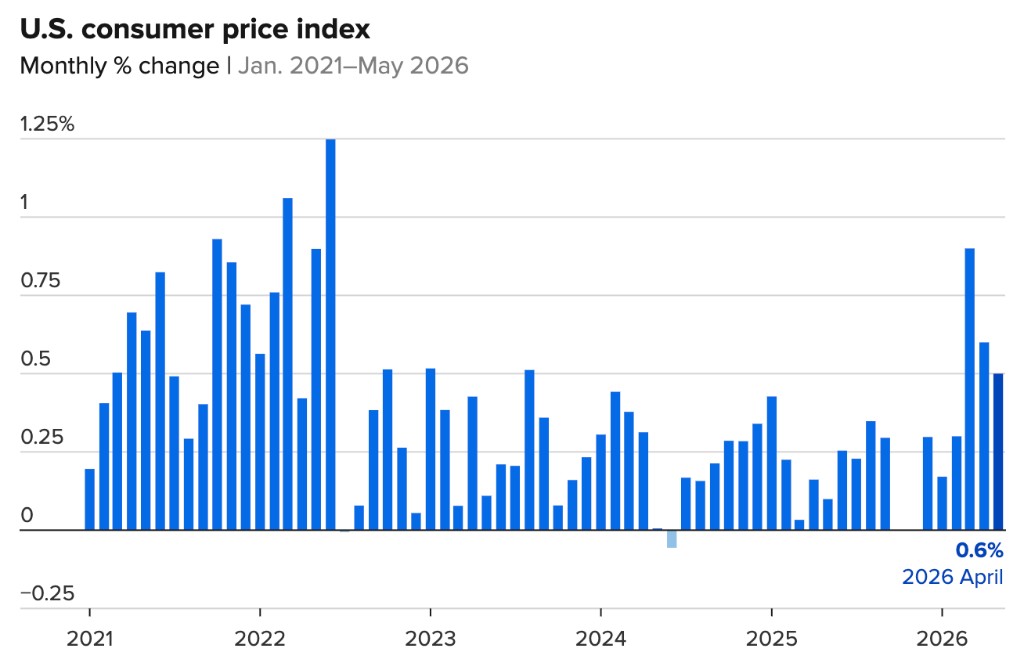
The monthly chart shows May's 0.5% increase following a 0.6% reading in April, part of a renewed upward drift after inflation spent much of 2024 and 2025 closer to the 2% to 3% range. Whether that trend continues will depend heavily on whether energy prices stabilize.
Final Thought: May's CPI report confirms that headline inflation is back above 4% for the first time in three years, driven mainly by energy, while core prices rose more slowly. Households still facing elevated costs for gas, food, shelter, and medical care have little relief in the headline numbers even as goods inflation stays subdued.