
What Changed With ChatGPT and Bank Account Access
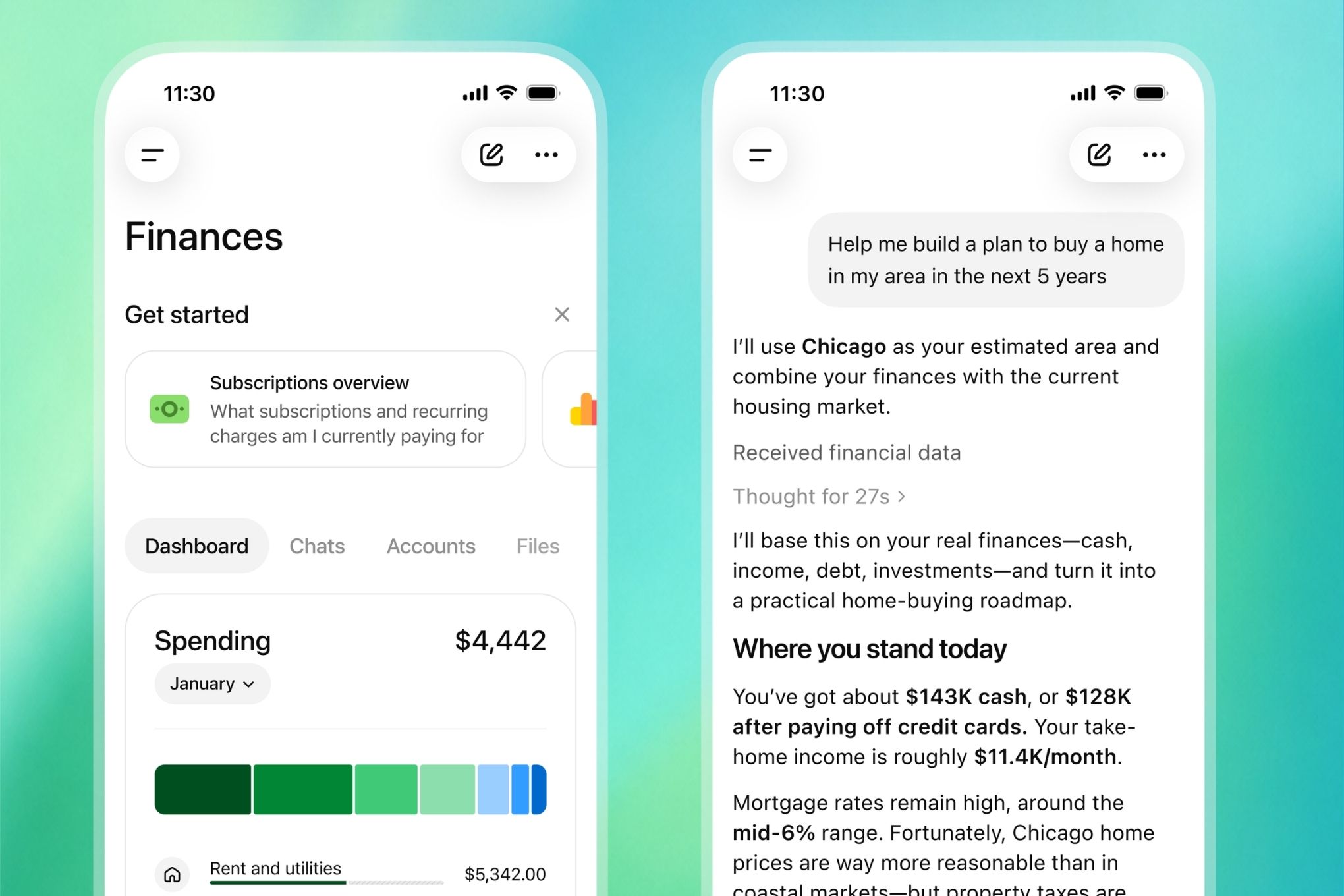
OpenAI has expanded ChatGPT's capabilities to include direct bank account connectivity, allowing users to link their financial accounts and view spending data inside the chatbot interface. The feature puts ChatGPT in the same category as established personal finance apps that rely on account aggregation to give users a picture of their money in one place.
The move, reported by Yahoo Finance, positions ChatGPT as a potential tool for budgeting, spend tracking, and financial Q&A grounded in a user's real account data rather than generic advice.
Source: Yahoo Finance
How the Account Linking Works
Account linking for consumer finance apps typically runs through data aggregators such as Plaid or MX, which act as intermediaries between a bank and a third-party app. When a user authorizes access, the aggregator pulls transaction history, balances, and sometimes payroll data and passes it to the requesting platform.
By tapping into this infrastructure, ChatGPT can theoretically analyze real spending patterns, flag recurring subscriptions, or answer budget questions using live account data rather than hypothetical figures. For consumers already using subscription management tools or a bill payment tracker inside another app, this represents a significant capability shift for an AI assistant.
The Privacy and Security Questions Consumers Are Asking
The core concern is straightforward: sharing bank credentials or granting read access to financial accounts with an AI company involves real risk. Key questions include:
- Who stores the data. It matters whether OpenAI retains transaction data, for how long, and whether it is used to train future models.
- What happens in a breach. Financial account data is a high-value target. Users should confirm what protections exist if OpenAI or a connected aggregator is compromised.
- Revocation of access. Consumers have the right to disconnect third-party apps from their bank accounts, either through the aggregator's portal or directly through their bank's settings. Checking these access lists periodically is a standard data hygiene step.
- Regulatory coverage. Bank deposits carry FDIC protections, but data shared with a third-party fintech or AI platform sits outside that framework. The Consumer Financial Protection Bureau has been working on open banking rules that would give consumers stronger data portability and revocation rights, though implementation timelines remain in flux.
Source: The Verge
How ChatGPT Compares to Budgeting Apps
The setup mirrors apps like Rocket Money or You Need a Budget: linking through Plaid (12,000+ institutions) and a familiar spending dashboard. Price is the bigger gap. Dedicated apps often have free tiers and charge under $100 per year for premium; ChatGPT's preview is Pro-only at $100 per month today, with Plus ($20 per month) next.
ChatGPT trades dashboards for conversational advice using linked data, but it cannot move money or access full account numbers. The question is whether that chat-first model justifies a far higher subscription and the privacy cost of linking accounts to an AI platform instead of a dedicated finance app.
Steps to Take Before Connecting
- Read OpenAI's data use and retention policies specific to financial data before authorizing access.
- Check whether your bank supports tokenized or OAuth-based connections, which avoid sharing your actual login credentials with a third party.
- Review which apps currently have access to your accounts through your bank's connected apps settings.
- Understand the process for revoking access if you change your mind.
Final Thought: Before you link accounts, be clear what you gain beyond existing budget apps - and whether the convenience is worth expanding your data footprint.